RFE
22 Jul 2025, 18:19 GMT+10
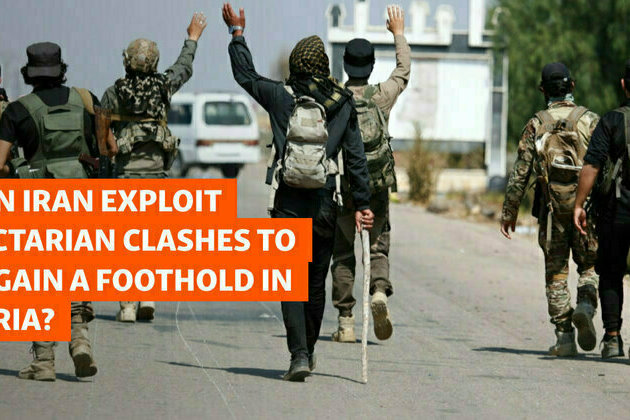
Amid deadly fighting between Druze fighters and Bedouin tribal militias in Syrias southern province of Sweida, one question looms: can Iran use these sectarian clashes to reclaim the influence it built during a decade of civil war?
For years, Iranian commanders and their proxies underpinned Bashar alAssads government, turning Syria into a land corridor that linked allied groups in Iraq and Lebanon. But since the abruptcollapseof the Assad dynasty last December and the partial withdrawal of Russian forces, Tehrans dominance has weakened.
Syrias interim president, former rebel leader Ahmed alSharaa, has struggled to rein in competing factions, creating openings -- and risks -- for Tehran in the south.
SEE ALSO:
Syria's Shift Away From Iran Sparks Media Backlash After Trump Meets With Ahmed al-Sharaa
The recent violence erupted after the abduction of a Druze merchant and retaliatory kidnappings, which quickly spiraled into widespread bloodshed.
Both sides carried out attacks and reprisal killings.
When Syrian government forces intervened, they were accused of siding with the Bedouins, sparking direct clashes with Druze fighters and allegations of extrajudicial killings, looting, and arson in areas inhabited by the Druze, a religious minority long concentrated in southern Syria with a tradition of self-governance and ambivalent ties to the state.
A cease-fire brokered on July 19 between the government, Druze militias, and Bedouin tribes halted a week of fighting that killed more than 1,000 people. For now, that truce holds, but only tenuously.
Irans longstanding strategy relies less on overt deployments and more on cultivating local militias and proxy commanders.
When violenceflaredin western Syria in March, some accused Tehran of stoking unrest, noting that several militia leaders had been trained by the Islamic Revolutionary Guards Corps (IRGC).
At the same time, Iranian officials have positioned themselves as defenders of Syrian sovereignty,condemningIsraeli air strikes as unhinged aggression and warning against Western interference.
The aim is not purely military; it is also to rebuild political capital among Syrians exhausted by war and wary of foreign domination.
SEE ALSO:
What Data Tells Us About The Violence In Syria
Yet Tehran faces steep obstacles. The Druze, who form the majority in Sweida, remain deeply distrustful of Iran and its Shi'ite proxies. Local Sunni tribes, locked in their own struggles, show little interest in outside patronage.
Adding to these difficulties is Israels renewed assertiveness.
Since the fall of Assads government, Israeli forces have intensified strikes on suspected Iranaligned targets near the occupied Golan Heights, vowing to block any reentrenchment. Israeli officials have even framed some attacks on Syrian positions as protecting the Druze.
Complicating matters further is Syrias fractured local landscape, where shifting loyalties and the rise of warlord rule make any Iranian gains volatile and shortlived. Meanwhile, Iranian allies elsewhere -- particularly Hezbollah in Lebanon -- have been weakened by heavy losses in recent fighting with Israel.
SEE ALSO:
Eyeing Regional Powers, Syria Is Freezing Iran Out
Beyond Syria, Irans network of armed proxies has stepped up activity.
Houthi forces in Yemen recently ended months of calm in the Red Sea with strikes on two commercial vessels. In Iraq, Iranaligned militias are suspected of disrupting oil production in the Kurdistan region. And in recent months, Syrian forces and the Lebanese Army have intercepted multiple rocket shipments bound for Hezbollah, which has been designated as a terrorist organization by the United States and other Western countries.
These actions highlight Tehrans resolve to sustain its proxy network as a core element of its deterrence strategy. Even if large, regular arms shipments are no longer feasible, Iran is intent on signaling that it remains influential and far from the weakened power some might assume.
For now, Tehrans approach in Syria is likely to be incremental and indirect, shaped by dwindling resources and heightened scrutiny.
Rather than dramatic moves, it will lean on covert arms transfers and efforts to rebuild local alliances.
Yet as long as Israel is watching, Irans bid to reestablish a strong foothold in Syria will remain fraught and uncertain.
Get a daily dose of Arab Herald news through our daily email, its complimentary and keeps you fully up to date with world and business news as well.
Publish news of your business, community or sports group, personnel appointments, major event and more by submitting a news release to Arab Herald.
More InformationAmid deadly fighting between Druze fighters and Bedouin tribal militias in Syrias southern province of Sweida, one question looms:...
Dhaka [Bangladesh], July 22 (ANI): India has offered medical assistance to victims of the recent fighter jet crash in the Diabari area...
The Egyptian Interior Ministry has reported foiling a plot to target key sites Egyptian security forces have killed several members...
Berlin [Germany], July 22 (ANI): The German government has confirmed that the Taliban will send two consular officials to Germany to...
Mumbai (Maharashtra) [India], July 22 (ANI): AIMIM national spokesperson Waris Pathan welcomed the Bombay High Court's decision to...
Iran says new round of talks with E3 to be held in Istanbul Friday Iran's Foreign Ministry spokesman Esmaeil Baghaei said on Monday...
A chorus of condemnation echoed across the international community on Monday as Britain and more than 20 other countries—including...
We are living in truly extraordinary times. We recently witnessed the United Nations special rapporteur on the situation of human...
A typical, but devastating day of violence and deepening humanitarian catastrophe unfolded across the Gaza Strip on Saturday, as at...
DUBLIN, Ireland: Taoiseach Micheál Martin has firmly rebuffed remarks made by U.S. diplomat Mike Huckabee, who criticized Ireland's...
Washington perceives the agency as hostile to Israel and influenced by China The US is planning to withdraw from the United Nations...
DUBAI, 22nd July, 2025 (WAM) -- Saeed Mohammed Al Tayer, Chairman of the Board of Trustees of the UAE Water Aid Foundation (Suqia UAE),...