ANI
31 Oct 2025, 01:39 GMT+10
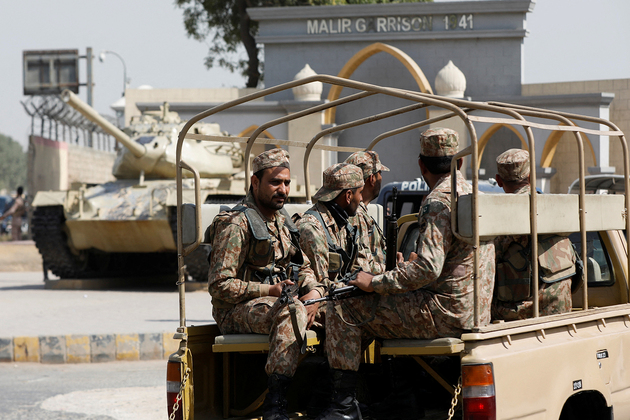
Washington [US], October 30 (ANI): Pakistan continues to nurture a system that promotes terrorism and directly contradicts its international obligations, an analyst has said, noting that Pakistan's enduring terror ecosystem aligns closely with the country's long-standing military doctrine of 'bleeding India with a thousand cuts' and that Islamabad's terror ecosystems remain intact.
Siddhant Kishore, a national security and foreign policy analyst based in Washington, writing in The Milli Chronicle, that when Pakistan assumed the chair of the Shanghai Cooperation Organization's permanent anti-terror body, the Regional Anti-Terrorist Structure (RATS), last month, optics were striking with a state sponsor of terrorism now overseeing a regional network tasked with combating it.
'Until Pakistan matches words with actions, its participation in regional counterterror frameworks will remain a facade.' He called it 'a state sponsor of terrorism now overseeing a regional network tasked with combating it.'
'The irony is hard to ignore,' Kishore wrote. 'For Islamabad's international posture and domestic rhetoric to carry credibility, its territory must no longer serve as a safe haven for groups trained and funded to strike Indian soil. Yet, the evidence suggests this condition remains far from met.'
Kishore said Pakistan's long-standing military doctrine of 'bleeding India with a thousand cuts' continues to drive its proxy strategy. 'Under this logic, groups like Jaish-e-Mohammad (JeM) and Lashkar-e-Taiba (LeT) serve not merely ideological but strategic purposes,' he noted.
Kishore noted that, despite India's precision strikes under Operation Sindoor on terror infrastructure in Pakistan in May 2025 in response to Pahalgam terror attack which killed 26 civilians, militant ecosystems in Pakistan 'remain largely intact.'
He pointed to Jaish-e-Mohammad (JeM) as an example, saying the group 'continues to plan operations, maintain training facilities, and innovate its fundraising mechanisms.'
'JeM is attempting to rebuild as many as 313 terror hubs across Pakistan,' he wrote. He added that even after Operation Sindoor, which killed more than a dozen members of Masood Azhar's family and destroyed JeM's headquarters in Bahawalpur, Azhar 'remains defiant in his terrorist drive against India.'
Kishore highlighted a worrying development that JeM terrorist Masood Azhar's reported plan to start a women's jihad course, Jamat-ul-Mominat. He wrote, 'If implemented, this can be a critical operational development for JeM, reminiscent of the Islamic State and Boko Haram.'
The analyst also noted public moves by the next generation of terrorists. He said the son of Lashkar-e-Taiba chief Hafiz Saeed 'has openly defied extradition calls,' using public rallies to praise military operations and urge 'jihad.' Kishore added that a Pakistani journalist reported Talha Saeed has taken leadership of an LeT-linked mosque in Lahore, indicating 'a generational shift in the group's command and control.'
Kishore raised alarm about how militant groups have shifted funding methods. 'While Islamabad touts its cooperation with the Financial Action Task Force (FATF), militant funding has evolved faster than its regulatory mechanisms,' he wrote.
He said groups such as JeM have moved from traditional banking channels into fintech platforms, mobile wallets and other e-payment systems to raise funds 'under the radar.' Quoting FATF President Elisa de Anda Madrazo's warning that Pakistan's removal from the Grey List was not 'bullet-proof,' Kishore stressed that terrorist financing 'remains largely unchecked.'
'This digital adaptation is not evidence of militant defeat but proof of resilience,' he wrote.
Kishore also argued that Pakistan's closer ties to the United States may weaken Washington's leverage. 'As Pakistan portrays itself as a 'regional counterterror partner' and a reliable economic hub, Washington remains inclined to prioritize a transactional relationship over accountability,' he wrote. That, he warned, could embolden Pakistan's military leadership to keep using jihadist groups as instruments of state policy.
'If training camps are allowed to be rebuilt, if digital funding networks flourish, and if terrorist rallies continue with active state approval, then Pakistan's leadership in counterterror structures becomes an exercise in hollow symbolism rather than substantive change,' Kishore wrote.
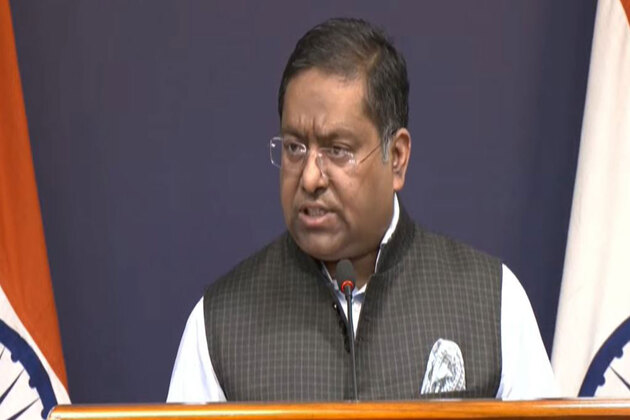
On Thursday, India criticised Pakistan's conduct in the region. In the weekly media briefing, MEA spokesperson Randhir Jaiswal said, 'Pakistan seems to think that it has the right to practice cross-border terrorism with impunity. Its neighbours find it unacceptable. India remains fully committed to the sovereignty, territorial integrity, and independence of Afghanistan.'
The MEA comments came in response to queries after failed peace talks between Pakistan and Afghanistan in Turkey and a spike in border clashes. According to Dawn, hostilities began on October 11 after the Taliban accused Pakistan of carrying out airstrikes inside Afghanistan, an allegation Islamabad has not confirmed. Pakistan's Defence Minister Khawaja Asif later warned of possible strikes inside Afghanistan, saying, 'We will conduct strikes, we definitely will. If we need to go deep into Afghanistan to retaliate, we surely will.'
Kishore concluded that Pakistan's claim to regional leadership in counterterrorism 'rests on fragile ground so long as its own territory hosts and in many cases, protects the very networks it purports to combat.' He warned that the U.S.-Pakistan relationship's transactional nature risks reinforcing Islamabad's confidence that it can pursue 'dual policies: cooperation abroad and complicity at home.'
'The question for the international community,' he wrote, 'is not whether Pakistan can change, but whether it wants to.' (ANI)
Get a daily dose of Arab Herald news through our daily email, its complimentary and keeps you fully up to date with world and business news as well.
Publish news of your business, community or sports group, personnel appointments, major event and more by submitting a news release to Arab Herald.
More InformationWashington [US], October 30 (ANI): Pakistan continues to nurture a system that promotes terrorism and directly contradicts its international...
New Delhi [India], October 30 (ANI): India has been granted exemption for six months from the American sanctions that were applicable...
Kupwara (Jammu and Kashmir) [India], October 30 (ANI): Jammu and Kashmir Chief Minister Omar Abdullah on Thursday expressed concerns...
New Delhi [India], October 30 (ANI): The Delhi Police on Thursday objected before the Supreme Court to the bail plea of Umar Khalid,...
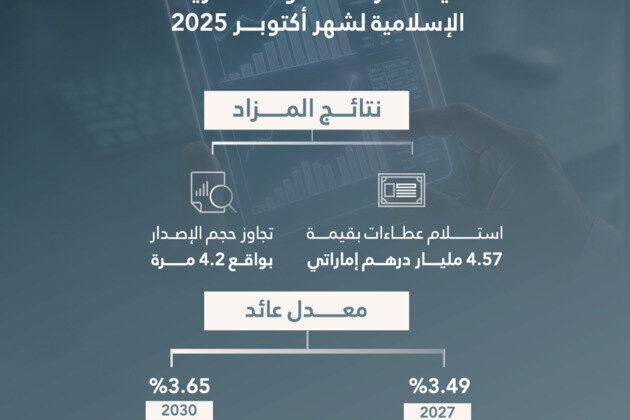
ABU DHABI, 30th October, 2025 (WAM) -- The Ministry of Finance (MoF), in its capacity as issuer, in collaboration with the Central...
Israel has launched its deadliest strikes on Gaza since the United States-brokered ceasefire took effect nearly three weeks ago, saying...
On October 4th, 2025, in an interview with Axios, President Trump stressed that one of the main goals behind his Gaza plan was to restore...
JERUSALEM - Israel will decide which international forces are chosen to monitor the Gaza ceasefire, and the United States agrees to...
Gaza City [Gaza], October 30 (ANI/WAM): The UAE Humanitarian Ship carrying 7,200 tonnes of food, shelter, and medical supplies has...
(Photo credit: Kirby Lee-Imagn Images) The International Olympic Committee and Saudi Arabia have canceled a 12-year deal for the...
BEIJING, Oct. 30 (Xinhua) -- When Mohammad Alhawi, undersecretary of the Ministry of Investment of the United Arab Emirates (UAE),...